Chapter One: don’t get lured by the obvious spots!
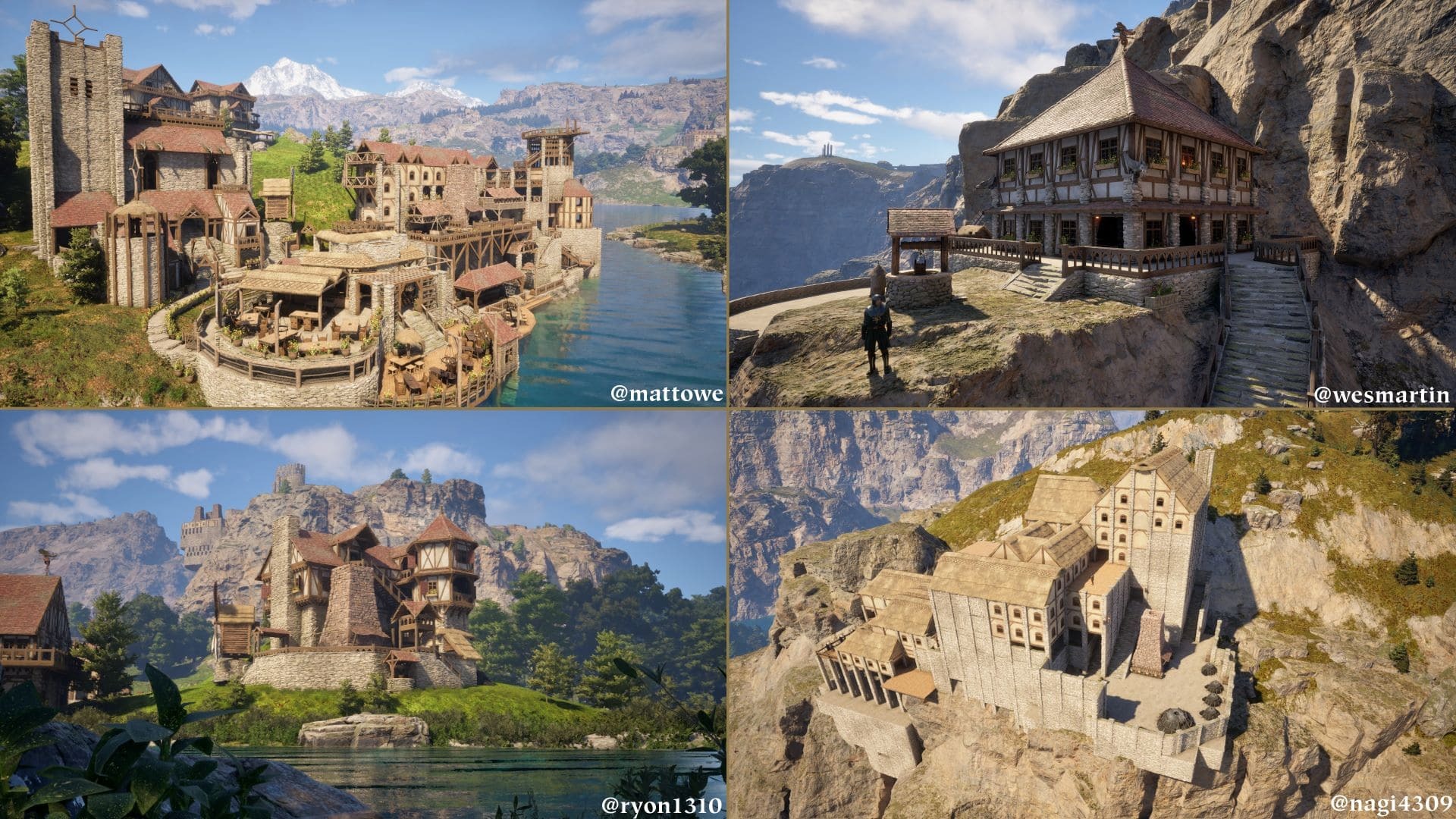
[b]Finding the perfect plot is probably one of the hardest things[/b] while playing solo, as you probably don’t want to be engulfed in the middle of a big Clan that calls dibs on all the resources in the area. So you will want to avoid the obvious zones:- Around the Petra Dei (the big standing stone where you first spawn);
- The top of the mountains;
- Islands;
- Borders of a lake…
Chapter Two: be curious and grab stuff!
The inventory and the item stacks have been vastly increased - some even say too much, so [b]gathering a bit of everything[/b] to see if it unlocks a recipe, and [b]stacking foods[/b] that will improve your health points, stamina, and regen is always smart. Typically, while looking for your first spot, it can be extremely useful to [b]grab the stones and clay[/b] you find on your way - like all of them. Gneiss rocks are easy to find close to the Petra Dei, but can be harder when you get away from it, at least until you can have your first pickaxe.Chapter Three: find your own pace!
Pax Dei is not fast-paced. Things take time. Playing solo obviously makes the progression slower. On the other hand, you can become far more autonomous and have much better knowledge of how things interact together. [b]The key thing is optimization[/b]. Don't just wait for the processing crafters to finish processing stuff. You can gather flax or hunt for hides while the iron is smelting. If you focus on, say, tailoring, don’t neglect your charcoal kilns burning because you will need a ton of charcoal when you get to smithing!Chapter Four: you can take some enemy camps, solo!
Of course, as a solo player don’t expect to go into the dungeon alone, but [b]as soon as you can have a mix of mail and leather, you can start to take on the Inquisition camps[/b]. You will have to be very careful with your pulls and be ready to run if things get hectic. As for gathering and crafting, there is a lot to learn. Get familiar with how enemies attack, learn to pull with a bow, and use a shield to block and bash. [b]Don’t be afraid to craft a LOT of wooden arrows[/b]. They don't do a lot of damage, but they are very cheap, are enough to pull, and will help you level up your Bow skill. Your blocking skill can also be critical as it has a huge impact on the mitigated damage. Check the different enemy camps, caves, and ruins. Some are easier than others and they often offer different rewards. At this point, you will probably discover your [b]first magic recipe[/b] and craft your first magic item. The world will then look different to your eyes. To close this chapter, and to say the opposite of what we stated at its beginning: [b]there are stories of players who manage to go solo into some dungeons[/b]. How do they do that? They plan. They get prepared. They remain careful. It is not easy and it is very dangerous. When you die, the corpse run part can be extremely difficult. However, these players have proven it is possible.
Chapter Five: don’t be shy, interact with others!
Writing an article about solo playing to advise on non-solo playing can be surprising, but again: [b]playing solo does not mean playing alone[/b]. Here, we are not telling you to join a Clan, even if you can find some who accept solo players and even some who regroup mainly solo players. What’s the point? They share hints and materials and sometimes group together to make some dungeon runs. Though, [b]the key point here is that you should not be afraid to interact with other players[/b]. It can be a friendly neighbor with whom you will exchange pieces of advice or a random encounter in the forest that will point you to some gathering spots or a cave that hosts a rare mob. Perhaps you have a Clan in your Home Valley open to trading basic materials - clay, gneiss, wood… - for equipment. An Iron Axe or Pickaxe can drastically ease your progression, and even just a little armor can greatly improve your survivability. It could also be a pick-up group that will help you farm a rare in an enemy camp. You [b]can even meet people outside the game[/b], on Reddit or Discord, for example, and make alliances. All in all, it is up to you, but don’t forget: in an MMO, there is a point where interacting with others can be hard to avoid.
Chapter Six: Discord is part of the meta.
Perhaps you don’t know it, but when you purchase Pax Dei, [b]you can obtain a Founder role on our [url=https://discord.gg/paxdei]official Discord[/url] server[/b]. This role will give you access to channels dedicated to Early Access - and a nice orange color for your nickname. Here, you will find global channels like community-help and some shard specific channels where you can find trade opportunities, player-driven events, and more.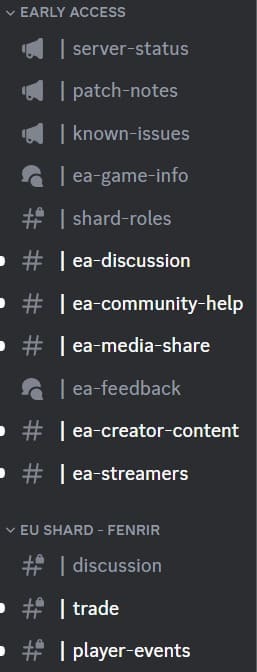 As Pax Dei develops, you can expect to see alliances being made, wars being declared, and lists of outlaws… An MMO is about the community, and Discord is a great place for it.
We hope you enjoyed those tips for playing Pax Dei solo - If you have more, share them with the rest of the community in the ea-discussion channel!
Pax Vobiscum
- The Mainframe team
As Pax Dei develops, you can expect to see alliances being made, wars being declared, and lists of outlaws… An MMO is about the community, and Discord is a great place for it.
We hope you enjoyed those tips for playing Pax Dei solo - If you have more, share them with the rest of the community in the ea-discussion channel!
Pax Vobiscum
- The Mainframe team